Apple Cider Pork Tenderloin with Apples & Onions
This Apple Cider Pork Tenderloin is one of those fall dinners that feels a little fancy, but is actually so simple. Juicy, spice-rubbed pork is served with a buttery apple cider sauce made with fresh cider, caramelized apples and onions, all right in one pan. It’s the perfect dinner once the temps drop and apple season begins.

I’ve been making variations of this recipe every apple season for years, and it’s truly become such a favorite. I used to sauté the apples and onions separately after searing the pork, then transfer everything to a small baking dish and pour the apple cider over the top. But this one-pan method is the winner. Everything cooks down together and develops so much more flavor, plus it’s way easier. And frankly, I hate having to dig out my roasting pan.
It’s savory with just a little sweetness, but not nearly as sweet as you might expect. There’s something magical about the way the apples, onions, balsamic vinegar, and cider all cook down together into this incredible savory sauce. Spoon it over each tender slice of pork and you’ll understand exactly why I keep coming back to this one.
You’ll never reach for plain old applesauce with your pork again. I don’t know what it is about apples and pork tenderloin, but they really do go together like PB&J.

What you’ll love about this recipe:

Ingredients you’ll need
Here’s a few notes on what you’ll need to make this one-pan apple cider pork tenderloin.
- pork tenderloin – You’ll need about 2–2½ pounds, usually two smaller tenderloins.
- apples –I use whatever I have on hand during apple season, which is usually McIntosh or Macouns.
- sweet onion – Yellow onion works just fine here, too.
- garlic – Fresh garlic cloves are best.
- apple cider – Look for fresh apple cider rather than apple juice.
- dry white wine – I like Sauvignon Blanc or Pinot Grigio. Apple cider can be substituted if you prefer to cook without wine.
- balsamic vinegar
- butter – I use salted butter, but unsalted works too.
- olive oil
- fresh rosemary + thyme – I recommend fresh herbs here rather than dried.
- kosher salt + black pepper
- garlic powder + onion powder
- smoked paprika
- cinnamon – You only need a touch, so don’t be tempted to go heavy-handed here
What kind of apples work best in this recipe?
Honestly, it doesn’t matter! I like to use whatever I’ve picked for the season, usually McIntosh or Macoun. They break down more as they cook, which I actually love because they almost melt right into the sauce.
If you use a firmer apple, like Granny Smith or Gala, the slices will hold their shape more and you’ll end up with distinct pieces of apple rather than as much of an apple-y sauce. I’ve made it both ways, and both are delicious – it really just depends on what you prefer!
How to make this one pan apple cider pork tenderloin
Its so much easier than you would think!


Season, sear and sauté
Coat the pork tenderloin all over with the spice mixture. Heat the olive oil in a large cast iron skillet over medium-high heat and sear the pork on all sides until nicely browned, about 5–6 minutes, then transfer it to a plate. Add 2 tablespoons butter to the same skillet, followed by the sliced apples, onions, and smashed garlic, and sauté for about 5 minutes, until they begin to soften.


Make the sauce and roast
Pour in the white wine and let it reduce, scraping up all those flavorful browned bits from the bottom of the skillet. Add the balsamic vinegar, apple cider, rosemary, and thyme and simmer for 8 minutes. Nestle the pork back into the skillet and roast at 400°F until the thickest part of the pork reaches 145°F, beginning to check around 15 minutes.. Transfer the pork to a cutting board to rest for at least 10 minutes, then stir the remaining 2 tablespoons butter into the sauce until melted and glossy.

Recipe TIP!
Don’t skip the rest time! Let the pork tenderloin rest for about 10 minutes before slicing so the juices have time to redistribute instead of running out onto your cutting board. And save any juices that do run to the sides, I like to pour them right back over the sliced pork. A cutting board with a drip tray along the edges comes in handy here.
What to serve with apple cider pork tenderloin
This pork tenderloin with apples and onions is just begging to be served with green beans or broccoli and mashed sweet potatoes as the perfect vehicle for soaking up any extra sauce left on the plate.
But if you want to impress and make it a little fancy, a fall salad would be perfect here. My favorite is my Pear & Gorgonzola Salad with Maple Dressing. The tart pickled onions, sweet pears, and savory Gorgonzola are such a good pairing with this apple cider pork tenderloin, and it makes a beautiful starter, too.

Recipe FAQs and substitutions
Can I make this without wine?
Absolutely. Replace the white wine with an equal amount of apple cider. The balsamic vinegar will still give the sauce plenty of flavor.
Can I use apple juice instead of apple cider?
You can, but I recommend using fresh apple cider if you can find it. Apple juice is has a lighter flavor, so the finished sauce won’t have quite the same depth.
What kind of apples should I use?
Honestly, use what you have! I love McIntosh or Macoun because they break down into the sauce. Firmer apples like Granny Smith or Gala will hold their shape more, which is also delicious, it just gives you a slightly different texture.
Can I use pork loin instead of pork tenderloin?
Absolutely! I’ve made this recipe with pork loin, too, and it works well. Just keep in mind that pork loin is a larger, firmer cut, so it won’t be quite as tender as pork tenderloin and will take longer to cook. I recommend cooking by temperature rather than time and removing it from the oven once the center reaches 145°F.
Why is my pork tenderloin dry?
Pork tenderloin is a very lean cut of meat, so the key is not to overcook it. Cooking time can vary quite a bit depending on the size and thickness of your tenderloin, so go by temperature rather than time.
For starters, be sure you’re only searing the pork in the first step, about 1 minute or less per side, just until the spices are seared on and the outside is golden brown. Then, start checking the pork with an instant-read thermometer in the thickest part after about 20 minutes in the oven. Cook until it reaches 145°F, then remove it from the oven and let it rest before slicing.
And don’t worry if the center has a slight blush of pink! Pork can still be perfectly safe at 145°F even if it isn’t completely white inside.


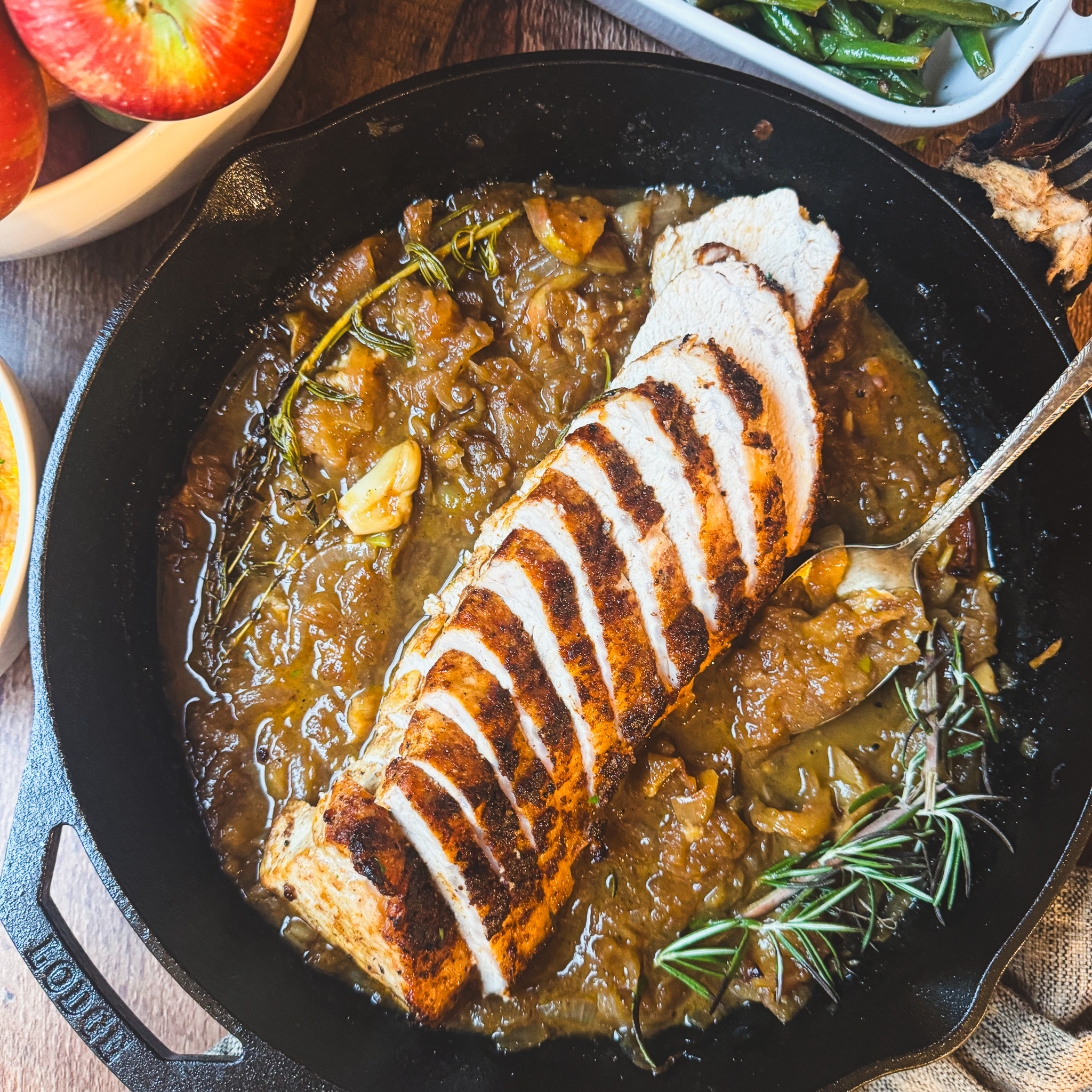
Apple Cider Pork Tenderloin with Apples & Onions
Ingredients
Method
- Season the pork. Preheat the oven to 400°F. Pat the 2 lbs pork tenderloin dry. In a small bowl, combine 1 teaspoon kosher salt, 1 teaspoon garlic powder, 1 teaspoon smoked paprika, ½ teaspoon onion powder, ½ teaspoon black pepper, and ¼ teaspoon cinnamon. Rub the seasoning evenly over all sides of the pork.
- Sear the pork. Heat 2 tablespoons olive oil in a large cast iron skillet over medium-high heat. Add the pork tenderloins and sear on all sides until nicely browned, about 5–6 minutes total. Remove the pork from the skillet and set aside.
- Sauté the apples and onions. Reduce the heat to medium and add 2 tablespoons butter to the same skillet. Add the 2 sliced apples, sliced sweet onion, and 4 smashed garlic cloves. Sauté for about 5 minutes, until the apples and onions begin to soften.
- Deglaze the pan. Pour in ¼ cup dry white wine, scraping up any browned bits from the bottom of the skillet. Let the wine simmer until mostly reduced.
- Make the cider sauce. Add 2 tablespoons balsamic vinegar, 1 cup apple cider, 1 sprig rosemary, and 1 sprig thyme. Stir to combine and simmer for about 8 minutes, allowing the sauce to reduce slightly.
- Roast the pork. Nestle the pork tenderloins back into the skillet with the apples and onions. Transfer the skillet to the oven and roast for 15-25 minutes, depending on the thickness of the tenderloins, or until the pork reaches your desired internal temperature.
- Rest the pork and finish the sauce. Transfer the pork to a cutting board and let it rest for 10 minutes. Meanwhile, continue cooking the sauce on the stovetop until it reaches your desired consistency and the apples begin to break down. Stir in the remaining 2 tablespoons butter until melted and the sauce is smooth and glossy.
- Slice and serve. Slice the rested pork and serve with the apples and onions, spooning plenty of the cider sauce over the top. Don’t forget those juices on the cutting board! Pour them right back over the sliced pork before serving.